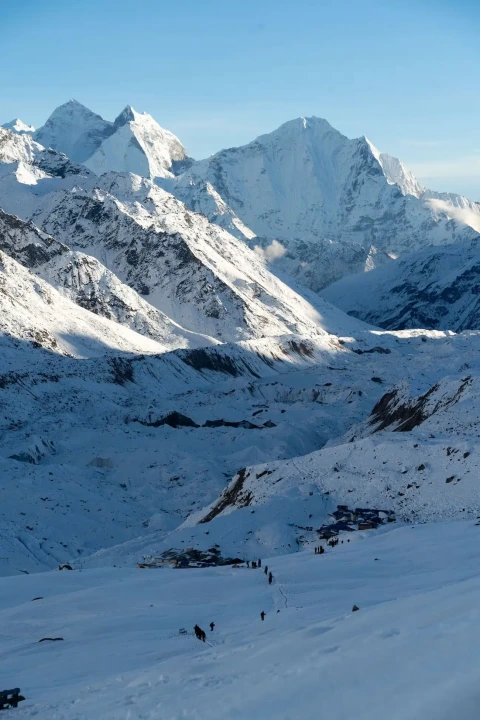
Overview of Island Peak Climbing Expedition
The Island Peak Climbing Expedition (Imja Tse, 6,189m) is one of Nepal's most popular and rewarding peak climbing adventures, offering a perfect introduction to Himalayan mountaineering. Situated in the heart of the Everest region, this stunning peak was named "Island Peak" by Eric Shipton's 1953 expedition because it resembles an island in a sea of ice when viewed from Dingboche. This Nepal peak climbing expedition combines trekking through the iconic Khumbu Valley with technical mountaineering.
The Island Peak climb combines trekking through the iconic Khumbu Valley with technical mountaineering on snow and ice. After acclimatizing at beautiful villages like Namche Bazaar, Tengboche, and Dingboche, you'll establish base camp and high camp before the summit push. The final ascent involves a steep headwall climb using fixed ropes (45-50 degrees) before reaching the spectacular summit ridge with its breathtaking 360-degree panorama including Mount Everest (8,848m), Lhotse (8,516m), Makalu (8,485m), and the stunning Ama Dablam (6,812m).
This Everest region climbing expedition is ideal for trekkers with some previous high-altitude experience who want to take their first steps into technical climbing. Prior experience with crampons and ice axes is helpful but not essential—your guide will provide comprehensive training at Base Camp. The climb requires excellent fitness, mental determination, and a spirit of adventure. Standing atop Island Peak at sunrise, watching the world's highest peaks light up in golden hues, is an experience you'll treasure forever.
Island Peak Climbing Highlights
Best Time to Climb Island Peak
Spring (Mar - May)
Stable weather, warming temperatures, and excellent climbing conditions. Rhododendrons bloom along the lower trails. The most popular season with longer summit windows.
ExcellentAutumn (Sep - Nov)
Crystal-clear skies, stable weather, and perfect mountain views. Cooler temperatures but excellent climbing conditions. Peak season with vibrant cultural festivals.
Best SeasonNote: Winter (Dec-Feb) is extremely cold with heavy snow and high avalanche risk. Monsoon (Jun-Aug) brings rain, clouds, and limited summit views - not recommended.
Day-by-Day Expedition Itinerary
Early morning departure from your hotel in Kathmandu for the transfer to Tribhuvan International Airport. Board a scenic 35-minute flight to Lukla (Tenzing-Hillary Airport), one of the world's most thrilling mountain airports. The flight offers spectacular aerial views of the Himalayan range including Langtang, Ganesh Himal, and on clear days, Everest and Kanchenjunga. Upon landing at Lukla's famous hillside airstrip (2,840m), you'll meet your climbing guide and porters. After organizing gear, begin your trek to Phakding. The trail descends gently through pine forests, crossing several suspension bridges over the Dudh Koshi River. You'll pass through the small village of Cheplung with its beautiful mani walls and prayer flags. This short trek helps with initial acclimatization while introducing you to the Khumbu region. Your climbing guide will conduct a preliminary gear check and discuss the climbing route ahead. Overnight in Phakding.
What's Included in This Island Peak Expedition
Cost Includes
- All airport/hotel transfers in private vehicle
- 3 nights hotel accommodation in Kathmandu (3-star with breakfast)
- All meals during trek and climb (breakfast, lunch, dinner)
- Teahouse accommodation during trek and tented camp during climb
- Experienced English-speaking climbing guide (government licensed)
- Assistant climbing guides for groups of 4 or more
- Sherpa support for summit push
- High-quality climbing tent (North Face or similar) at Base Camp and High Camp
- Group climbing gear (ropes, ice screws, snow bars, etc.)
- Personal climbing gear: harness, crampons, ice axe, helmet, ascender, carabiners
- Satellite phone for emergency communication (pay per use)
- Porter service (1 porter per 2 trekkers, max 20kg per person)
- Sagarmatha National Park entry permit
- Island Peak climbing permit
- TIMS (Trekkers' Information Management System) card
- All ground transportation as per itinerary
- First aid medical kit including pulse oximeter and Gamow bag
- Sleeping bag and down jacket for high altitude (can be returned after trek)
- Duffle bag for porter to carry your belongings
- Trekking map of Everest region
- Farewell dinner in Kathmandu
- Island Peak summit certificate
- All government taxes and official expenses
- Emergency evacuation arrangement assistance (cost covered by insurance)
- Packed lunch for summit day
- Oxygen cylinder and mask for emergency use
Cost Excludes
- International airfare to/from Nepal
- Nepal visa fee ($30 USD for 15 days, $50 for 30 days - available on arrival)
- Travel insurance (mandatory - must cover high altitude climbing up to 6,200m & helicopter evacuation)
- Personal climbing gear not mentioned (boots, gaiters, etc.)
- Meals in Kathmandu (except welcome dinner and breakfasts)
- Bottled/mineral water during trek (purification tablets provided)
- Hot showers and battery charging at lodges ($2-5 per use)
- Alcoholic beverages and soft drinks
- Personal expenses (phone calls, laundry, bar bills, souvenirs)
- Tips and gratuities for guides, sherpas, and porters (recommended)
- Emergency evacuation/helicopter rescue costs (covered by insurance)
- Any costs arising from unforeseen circumstances (weather, flight delays, political unrest)
- Summit bonus for climbing guide and sherpa (customary)
- Personal climbing insurance
Important Information for Climbers
- • Permits Required: Island Peak climbing permit, Sagarmatha National Park entry permit, and TIMS card are all included and arranged by us.
- • Physical Fitness: This is a strenuous climb requiring excellent fitness. You should be comfortable trekking 5-7 hours daily at altitude and have good cardiovascular endurance.
- • Technical Experience: Previous mountaineering experience is helpful but not essential. Your guide will provide comprehensive training at Base Camp on crampon use, rope techniques, and ice axe handling.
- • Travel Insurance: Mandatory - must cover high altitude climbing up to 6,200m and helicopter evacuation. This is non-negotiable for your safety.
- • Lukla Flights: Weather can cause flight delays. We include buffer days, but be prepared for possible schedule changes. Pack essentials in hand luggage.
- • Acclimatization: Proper acclimatization is crucial. Our itinerary includes rest days at Namche and Dingboche, plus a contingency day for summit flexibility.
- • Summit Bonus: It's customary to provide a summit bonus to your climbing guide and Sherpa upon successful summit (typically $150-250 total).
Photo Gallery - Island Peak Expedition
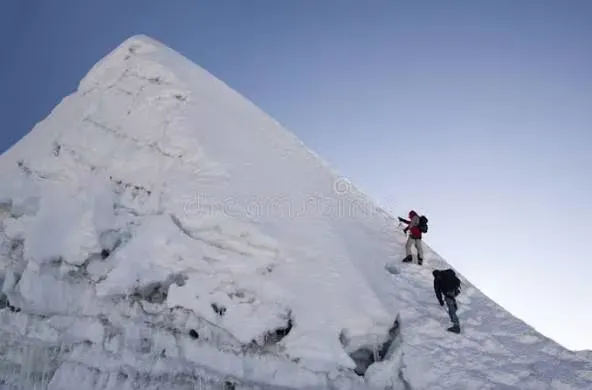
Island Peak Summit (6,189m) with Everest behind
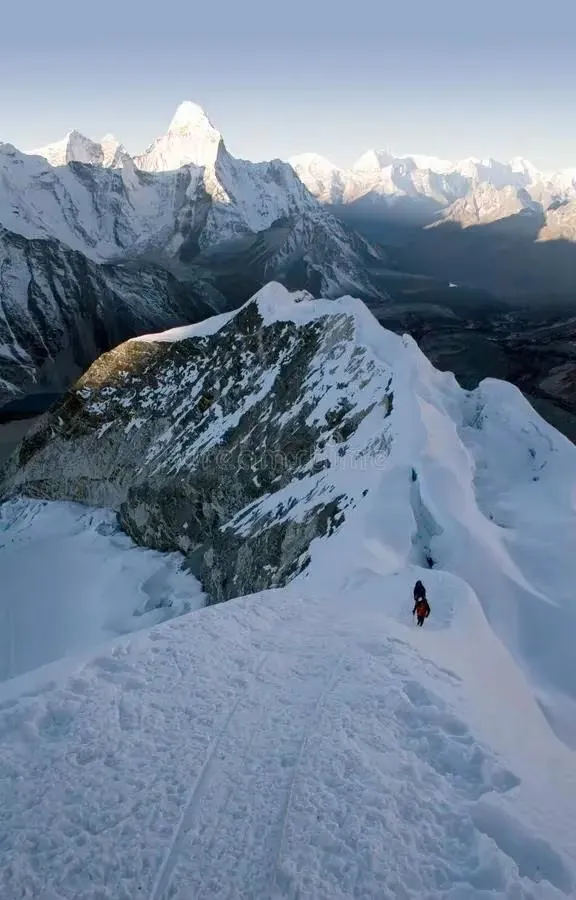
Climbing the headwall on Island Peak
Frequently Asked Questions About Island Peak
How difficult is Island Peak climbing?
Island Peak is considered a trekking peak but requires technical climbing skills. The climb involves walking on glaciers, crossing crevasses, and ascending a steep headwall with fixed ropes (45-50 degrees). Good physical fitness, mental determination, and some previous high-altitude experience are essential. Prior technical experience is helpful but not mandatory as training is provided.
Do I need previous climbing experience?
Previous mountaineering experience is beneficial but not strictly required. Many successful climbers are experienced trekkers with good fitness who learn technical skills during training at Base Camp. You should be comfortable with heights and have a good head for exposed terrain. Your guide will teach you proper use of crampons, ice axe, and rope techniques.
What is the success rate on Island Peak?
Success rates vary by season and weather conditions but typically range from 70-90% with proper preparation. Spring (March-May) and autumn (September-November) offer the best conditions. Our experienced guides, proper acclimatization schedule, and contingency day significantly improve summit success.
What climbing gear do I need?
We provide group climbing gear (ropes, ice screws) and technical equipment (harness, crampons, ice axe, helmet, ascender). You'll need personal items: climbing boots (plastic or insulated), gaiters, warm clothing, headlamp, sunglasses, and backpack. A detailed gear list will be provided upon booking.
What about altitude sickness?
Our itinerary includes proper acclimatization with rest days at Namche (3,440m) and Dingboche (4,410m) plus a gradual ascent profile. We carry a Gamow bag and oxygen for emergencies, and our guides are trained in altitude sickness recognition. Good hydration, slow ascent, and listening to your body are crucial.
What is the accommodation like during the climb?
During trekking, you'll stay in comfortable teahouses with twin-sharing rooms and shared bathrooms. At Island Peak Base Camp and High Camp, we use high-quality mountain tents with sleeping mats. Meals are prepared by our camp staff. Teahouses offer basic but warm facilities.